Muzz: Where Muslims Marry
- 4.4
- Rating
- 10.00M
- Installs
- Free
- Price

 Analysis by App-foxy
Choosing a dating app for marriage is different from choosing one for casual conversation. I would want the purpose to be clear, the people using it to share a meaningful cultural framework, and the experience to leave room for personal boundaries rather than pushing me toward endless swiping. That is the space Muzz tries to occupy: it is a social app from Muzz built specifically around Muslim marriage and serious introductions.
My first impression is that its value depends less on how many profiles I can browse and more on whether I want a Muslim-focused environment in the first place. The app is free to install, carries a Mature 17+ content rating, and has reached over ten million installs. Those figures suggest that it is not a tiny niche experiment, but popularity alone does not make every match suitable. The real question is whether its approach fits the way I want to meet someone.
What I would decide before creating a profile
I would begin by being honest about my timeline and expectations. Someone looking for a spouse, rather than a quick date, needs to decide how much time they are prepared to spend explaining their values, family expectations, location preferences, and level of religious practice. A profile on this app works best when it filters for those priorities instead of trying to appeal to everyone.
You May Also Like

 Blood Strike: 2.5 Anniversary
Blood Strike’s Loadouts Turn Every Drop Into a Tactical Gamble
A close look at Blood Strike’s custom loadouts: how fast access to signature weapons reshapes its battle royale rhythm, rewards preparation, and narrows the gap between fights.

 Pandora - Music & Podcasts
Pandora’s Music Is Easy to Start, but Harder to Recover
Pandora’s strength is its low-effort path from a seed to a station. Its weak spot is how much confidence it asks you to place in connection, setup, and quiet recovery.

 8 Ball Pool
 Is Built on Rivalries, Rematches, and Routine
A close look at the rivalries, rematches, shared routines, and unanswered safety questions that turn a quick pool match into a persistent mobile community.

 Samsung Music
’s Quiet Strength Is Playing What You Already Own
Its reach comes less from spectacle than from dependable access to a personal library. That simplicity is both the app’s strongest retention engine and its ceiling.

 AccuWeather: Weather Radar
AccuWeather Review: A Quick, Clear Forecast for Everyday Decisions
For everyday plans, the best forecast is the one you can understand quickly. AccuWeather makes rain timing, radar, and local conditions easy to act on, with a few trade-offs.

 Hill Climb Racing
Why Hill Climb Racing Still Turns Crashes Into One More Run
A tiny car, a bumpy hill and one more upgrade: Hill Climb Racing keeps resurfacing because its simple chaos makes every near-miss feel personal.
More From Our News Desk
View All News


I would also ask whether I want a specifically Muslim setting or a broader dating pool. General dating apps can offer more variety in background and relationship style, but they often require users to explain their religious expectations from the beginning. Muzz makes the opposite trade-off: the shared Muslim context can make important conversations easier, while the narrower focus may reduce the number of people who feel compatible in other ways.
That distinction matters for users who are not simply looking for someone with the same label. Questions about marriage timing, family involvement, cultural traditions, career plans, children, and personal boundaries still need to be discussed directly. A focused app can create a better starting point, but it cannot replace judgment or difficult conversations.
The app is currently on version 8.89.0a and supports devices running Android 8.0 or later. That makes it accessible to people using older Android phones, although I would still keep the operating system updated for general account security and a smoother experience. On iOS, I would make the same practical check before committing time to a profile: an app can be useful only if it runs reliably on the device I use every day.
How I would set up a useful profile
I would avoid writing a profile that says only “serious about marriage.” That phrase is too broad to help another person decide whether to start a conversation. I would instead describe the kind of marriage I hope to build, the values that guide my daily life, and the subjects I consider important early on. I would keep the wording warm and specific without revealing private details that a stranger does not need.
Photos deserve the same care. I would choose clear, recent pictures that represent how I normally look, rather than images that create an unrealistic impression. I would also avoid placing workplace details, home information, phone numbers, or social-media handles in the profile. A marriage-focused purpose does not make every user trustworthy, so basic privacy habits remain essential.
One useful workflow is to decide my non-negotiables before browsing. I might separate them into three groups: matters that are essential, preferences that are flexible, and issues that require a conversation. This prevents me from rejecting someone over a minor difference while also stopping me from rationalizing a serious mismatch because the first conversation feels exciting.
What the first conversations should accomplish
I would treat messaging as a screening stage, not as a substitute for meeting. The first exchange should establish whether the other person understands the purpose of the app and communicates respectfully. If the conversation immediately becomes pressuring, overly intimate, evasive, or focused on money, I would end it rather than trying to rescue the interaction.
For a promising match, I would gradually move from easy subjects to practical ones. Work, education, family responsibilities, location, faith, marriage expectations, and conflict habits tell me more than a long exchange of compliments. I would not demand personal information too quickly, but I would also avoid spending weeks in vague conversation with no intention of clarifying compatibility.
A realistic everyday scenario might look like this: I have a busy workday, so I check a few profiles during a short evening break rather than treating the app as a constant stream. I read the profile carefully, send one message tied to something specific, and notice whether the reply shows similar effort. After several respectful conversations, I arrange a suitable next step while keeping my private contact details and routine protected. That approach makes the app a tool for deliberate introductions instead of another source of notification fatigue.
Where Muzz earns its place
The strongest reason I would choose this app is focus. Its purpose is not hidden behind a general dating culture where marriage may be one possibility among many. The identity of the service gives users a clearer starting point, and that can reduce awkward conversations about whether a relationship is intended to become serious.
Its audience is also a practical advantage for Muslims who find it tiring to search through broad platforms. A shared religious and cultural reference can make it easier to discuss boundaries, family, and long-term intentions. It does not guarantee agreement, but it can remove one layer of uncertainty from the first interaction.
The app has an average rating of 4.4 from around 335 thousand ratings, which is a healthy sign of broad user satisfaction, though I would not treat it as proof that every experience will be positive. Ratings combine many types of users and circumstances. Someone who wants a very different dating style may reasonably judge the same app less favorably than someone actively seeking a Muslim marriage community.
I also appreciate that the service is free to start. That lowers the barrier for someone who wants to understand the community before spending money. I can create a profile, learn how conversations feel, and decide whether the available audience is relevant to me instead of paying before knowing whether the app fits my situation.
Small habits that make the focused model more useful
I would use the profile as a conversation filter rather than trying to maximize attention. A profile that clearly states what I value may attract fewer messages, but the messages are more likely to be relevant. In a marriage-oriented setting, that is a better outcome than collecting a large number of shallow conversations.
I would also review my matches in batches. Checking constantly can make every new profile feel urgent and can encourage decisions based on appearance alone. A short, planned session gives me time to read carefully, compare actions with stated intentions, and stop when I am tired. The app’s focused purpose deserves a focused routine.
Another useful trade-off is to move from private chat to a more accountable conversation at the right moment. Some people may prefer involving a trusted person once mutual interest becomes serious; others may want more private space at first. I would discuss that expectation early rather than presenting it as a surprise after emotional attachment has formed. The important point is that the app can begin the introduction, but the relationship needs a process that both people understand.
I would keep a simple mental record of consistency. Does the person answer questions directly? Do their plans remain stable? Do they respect a delayed reply? Do they push for secrecy or fast commitment? These observations are more valuable than polished profile language. A serious app still contains individual behavior, and behavior is what I would evaluate.
Safety and emotional boundaries still belong to the user
I would never send money, share financial details, or accept pressure to move quickly because someone claims to be serious about marriage. I would be cautious if a match avoids ordinary questions, refuses a reasonable video or voice conversation, or creates an emergency that requires financial help. These are not problems unique to this service; they are reasons to slow down on any dating platform.
For an in-person meeting, I would choose a public place, tell someone I trust where I am going, and arrange my own transport. I would not allow the app’s marriage-focused identity to create false confidence. A shared faith or cultural background may help people connect, but it does not eliminate the need for ordinary safety checks.
Emotional boundaries matter too. I would avoid treating a promising chat as a commitment before meeting and discussing practical compatibility. If a conversation becomes intense very quickly, I would deliberately slow the pace. That protects me from confusing attention with suitability, especially when the app’s purpose encourages users to think about marriage early.
What the paid layer changes in my decision
The app is free, but it includes in-app purchases ranging from $0.99 to $229.99 per item. I would therefore treat optional spending as a convenience decision, not as a requirement for proving that I am serious. Before buying anything, I would ask what specific problem the purchase solves and whether it improves my ability to judge compatibility.
I would set a firm personal budget before exploring paid options. A large purchase cannot create mutual interest, improve another person’s honesty, or make an unsuitable match appropriate. If the free experience already gives me enough relevant conversations, I would keep using it without assuming that more spending will produce a better outcome.
The cost of switching is relatively low because the app can be tried without an upfront purchase. Still, there is a different kind of switching cost: time and emotional energy. Completing a profile, learning the community, and starting conversations takes effort. If I leave, I may lose momentum with people I was getting to know, so I would not jump between platforms every few days simply because browsing feels slow.
On the other hand, staying too long is also a mistake. If the available matches are consistently far from my location, expectations, or preferred level of religious practice, I would not interpret persistence as virtue. A broader dating app may be a better supplement, or a local community introduction may suit me more. The right choice is the one that produces respectful, realistic opportunities, not the one I use out of habit.
When another category may fit better
I would choose a general dating app instead if I wanted to meet people across religious backgrounds or if marriage was not my main goal. A broad service may provide a larger range of lifestyles and relationship intentions, but I would need to spend more time clarifying whether a match shares my expectations.
I would consider community-based introductions if family or trusted friends play a central role in how I want to meet a spouse. That route can offer more context and accountability, although it may also feel less private and give me less control over the initial search. Muzz sits between those approaches: it offers a digital starting point while keeping the search centered on Muslim marriage.
I would skip it if I am uncomfortable with a marriage-first environment, unwilling to discuss faith and long-term plans, or mainly looking for casual dating. Using it with the wrong intention would create frustration for me and for people who joined expecting seriousness. I would also look elsewhere if the local pool is too small or if I need a dating format built around a different kind of relationship.
For parents, guardians, or relatives helping an adult family member, I would be careful not to turn the app into a system of pressure. The person using it should control their profile, conversations, and decisions. Advice can be useful, but a marriage introduction is not successful if the individual feels monitored or unable to say no.
My recommendation after weighing the trade-offs
I recommend Muzz for Muslims who genuinely want a marriage-oriented introduction and are prepared to do the careful work that comes after matching. Its focused audience, free entry point, and clear purpose make it more suitable than a general dating service for someone who wants religious and long-term context near the beginning of the process.
I would not recommend downloading it simply because it is popular. It has over 2.7 thousand written reviews and a large user base, but those signals cannot decide whether the people available to me match my needs. I would judge it through a short trial: create an honest profile, set boundaries, start a small number of thoughtful conversations, and assess the quality rather than the volume of responses.
The developer, Muzz, has maintained the app since its release on April 10, 2015, and the current version is 8.89.0a. That history gives the service a mature presence in its category, while the ongoing version changes are a reminder to keep the app updated and review its settings from time to time. I would still make my decision based on present-day conversations, not on age or scale alone.
In my view, the best way to use it is deliberately: define what matters, protect personal information, ask practical questions early, and move forward only when actions support words. The app can make the first connection more relevant than a general dating platform, but it cannot perform the judgment required for marriage. If that balance sounds right to you, the free starting point makes it worth trying. If you want casual dating or a much broader social pool, I would choose a different category instead.
FAQs for Muzz: Where Muslims Marry
01What is Muzz: Where Muslims Marry?
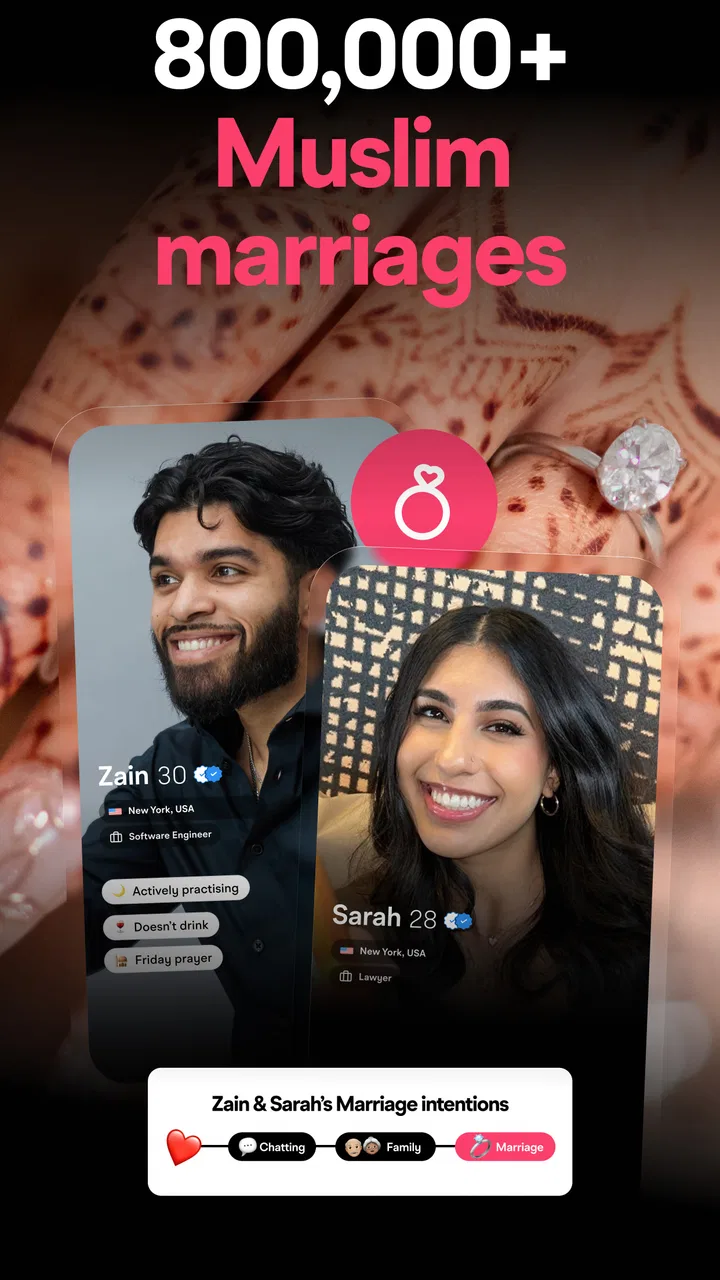
Muzz is a Muslim-focused matchmaking and marriage app designed to help users meet people who share their faith, values, and intention to pursue a serious relationship. During testing, the app presented profiles with information such as location, interests, religious preferences, and relationship goals. It is aimed primarily at Muslims seeking marriage rather than casual dating, although the experience can vary depending on the users and filters available in your region.
02Do I need to be Muslim to use Muzz?
Muzz is specifically built for Muslims and places strong emphasis on Islamic identity, compatibility, and marriage intentions. Users generally create profiles that reflect their religious background and preferences, making it most suitable for people who want a partner within the Muslim community. Anyone considering the app should review the current eligibility rules and profile options, since availability and requirements may differ by country and app version.
03Is Muzz free to download and use?
Muzz can usually be downloaded for free on Android and iOS, and basic features may be available without payment. However, the app also offers optional premium features or subscriptions that can improve visibility, provide additional filters, or unlock extra interaction tools. Before subscribing, check the pricing shown inside the app, renewal conditions, and cancellation process, as costs and available plans can vary by location.
04Does Muzz support chaperones or family involvement?
One of Muzz’s notable features is its focus on respectful, marriage-oriented communication, including options intended to make family or chaperone involvement easier. Depending on the current version, users may be able to invite a trusted person to observe conversations or participate in the process. This can be useful for people who want additional accountability, but both parties should discuss expectations and privacy before enabling such features.
05Is Muzz safe and suitable for finding a marriage partner?
Muzz includes tools such as profile reporting, blocking, verification options, and privacy controls to help users manage unwanted behavior. Nevertheless, no dating platform can guarantee that every profile is genuine or that a match is compatible. Avoid sharing financial information, verify important details independently, use in-app communication initially, and arrange first meetings in public places. Treat the app as a starting point for careful, real-world compatibility checks.
Pros
- Designed specifically for Muslims seeking marriage
- not casual dating.
- Profiles include faith-related details to help assess compatibility.
- Chaperone options can support more family-conscious conversations.
- Useful search filters for location
- age
- education
- and religious preferences.
- Video and voice calls can help users connect before arranging a meeting.
Cons
- Many meaningful features may require a paid subscription.
- The user base and match quality can vary significantly by location.
- Some profiles may be incomplete
- inactive
- or slow to respond.
- Strict marriage-focused expectations may not suit users wanting casual dating.
- Sharing personal details still requires caution despite privacy and safety tools.

Muzz: Where Muslims Marry
Gallery